 info@bossescabin.com
 1800 123 0503
Engineered Wood in Office Furniture: A Responsible, Performance-Driven Material Choice
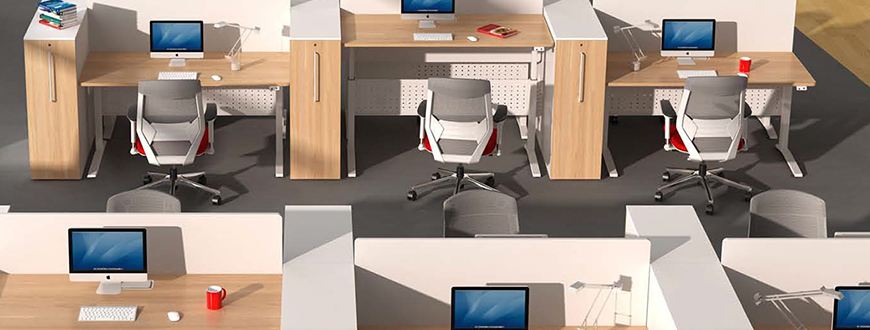
Material selection is a critical architectural decision—one that influences not only aesthetics, but also performance, durability, and environmental impact over a product’s lifecycle.
Physicist and science communicator Brian Cox has observed that wood is among the most precious materials available to us—not because it is rare, but because it represents an intricate balance of natural systems developed over time. In design and construction, the responsibility lies in how efficiently that material is deployed.
In contemporary office furniture, engineered wood has emerged as a material that aligns with this principle.
Material Responsibility in Architectural Specification
Responsible material use is not defined by avoiding natural resources, but by optimizing yield, performance consistency, and service life.
Traditional solid wood furniture presents several challenges at scale:
- High material wastage during milling and seasoning
- Variability in grain structure and moisture behaviour
- Susceptibility to warping, cracking, and joint failure
For large office environments—where uniformity, predictability, and longevity are essential—these limitations become critical.
What Constitutes Engineered Wood?
Engineered wood products are manufactured by bonding wood veneers, fibres, or particles under controlled pressure and temperature to achieve predictable mechanical properties.
Common architectural-grade materials used in office furniture include:
- Calibrated plywood panels
- Medium Density Fibreboard (MDF)
- High-density particle boards with industrial laminates
These products are designed to deliver consistent thickness, load-bearing capacity, and surface finish, which are essential for precision fabrication and modular furniture systems.
Performance Advantages in Office Furniture Applications
1. Dimensional Stability
Engineered wood exhibits superior resistance to:
- Seasonal humidity variations
- Expansion and contraction
- Surface deformation
This stability is particularly important in air-conditioned office environments and large-span work surfaces such as executive desks and conference tables.
2. Structural Reliability
By distributing fibres and veneers across layers, engineered wood:
- Reduces internal stress points
- Improves load distribution
- Minimizes long-term structural fatigue
This translates into furniture that maintains form and function over extended usage cycles.
3. Material Efficiency and Reduced Waste
Engineered wood maximizes usable output from each harvested tree by:
- Utilizing smaller-diameter timber and wood residues
- Reducing offcuts and rejection rates
- Enabling scalable manufacturing with consistent quality
From an environmental and procurement standpoint, this represents a more responsible use of natural resources.
Compatibility with Contemporary Office Design
Modern office interiors demand:
- Tight tolerances
- Consistent visual language across large floor plates
- Integration with metal frameworks, glass, and modular systems
Engineered wood supports:
- Uniform surface finishes
- Precise CNC machining
- Adaptability to custom and modular furniture configurations
This makes it particularly suitable for:
- Corporate headquarters
- Government and PSU offices
- Institutional and commercial workspaces
Lifecycle Considerations and Sustainability
Sustainability in furniture is often misunderstood as material minimalism. In practice, it is defined by product longevity and reduced replacement frequency.
Engineered wood, when properly specified and finished:
- Extends furniture lifespan
- Reduces maintenance requirements
- Lowers total lifecycle environmental impact
Longevity, in this context, is a measurable sustainability metric.
Design Responsibility in Practice
At Boss’s Cabin, engineered wood is selected not as a substitute, but as a deliberate architectural choice—balancing performance, efficiency, and responsible material use.
The objective is not excess, but precision: furniture systems that perform reliably while respecting the resources they depend on.
Conclusion: Precision Over Rarity
Wood’s value lies not in its scarcity, but in the intelligence of its application. Engineered wood allows architects, designers, and specifiers to work with wood in a manner that is structurally sound, materially efficient, and environmentally considered.
In modern office furniture, responsibility is not an aesthetic statement—it is a technical decision.
Estimated reading time: 3 minutes

